

How can high-quality enrichment help tackle youth disengagement and improve outcomes for young people?
In this latest blog, Dr John Allan, Head of Impact and Breakthrough Learning at PGL Beyond, explores the growing evidence behind enrichment, the importance of robust evaluation, and why collaboration is key to creating meaningful, lasting change for young people.
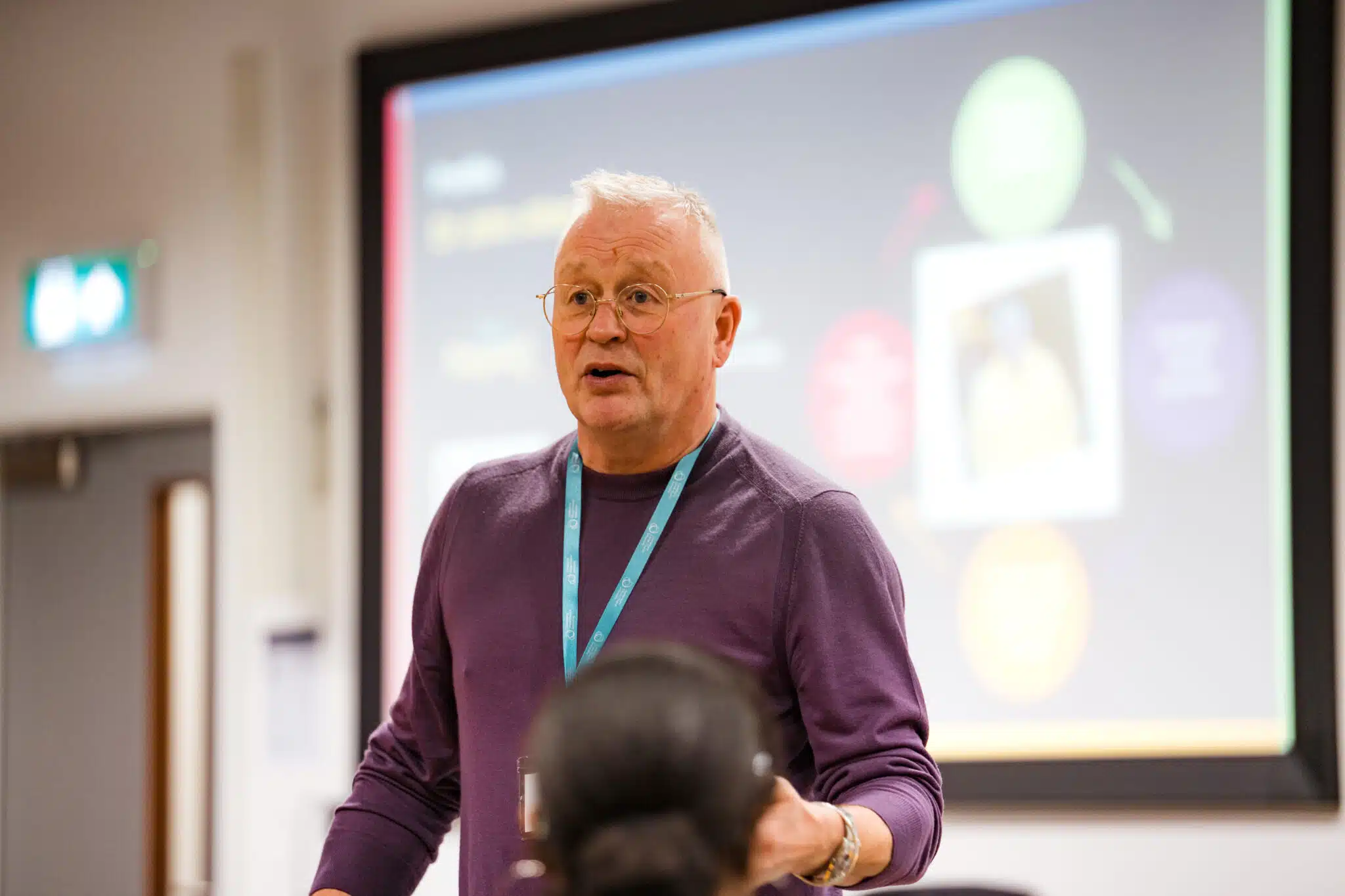
Dr John Allan
At the recent Labour Party Conference, I outlined to an engaged audience how current evidence suggests that high-quality enrichment in schools and colleges can make a positive contribution to children and young people’s psychosocial development, including their resilience, wellbeing, relationships with others and future employability skills. High-quality enrichment is characterised by regular, inclusive and developmentally appropriate activities, incorporating clear goals, variety and creativity, and connections to the curriculum and wider school or community priorities.
However, I also highlighted that the evidence base has important limitations. Although there is substantial support for positive associations and short-term outcomes, empirical evidence of the longer-term impacts remains less developed. Furthermore, enrichment opportunities are not universally accessible to all learners, particularly those from disadvantaged backgrounds and those with additional learning needs, which can create biases in the available evidence. Consequently, more extensive, longitudinal and robust evaluation is needed to understand how change happens, which programme components are most effective in bringing about change across different groups of learners, and whether improvements in psychosocial skills translate into sustained outcomes in academic attainment, employment, school attendance, health and wellbeing. Research must also recognise that young people’s experiences are unique and shaped by their individual social and environmental contexts. This reinforces the need to move away from one-size-fits-all approaches towards more targeted provision that responds to learners’ differing needs.
With this in mind, high-quality enrichment, supported by rigorous measurement and evaluation throughout young people’s educational journeys, can contribute to tackling youth disengagement and mitigating the risk of young people becoming NEET (not in education, employment or training). Using valid and reliable psychometric measures, enrichment can provide telling contexts in which young people develop the personal, social and employability capabilities needed to navigate educational transitions, changing employment demands, social pressures and uncertainty. Most importantly, it can help generate hope by enabling young people to develop meaningful goals, alongside the confidence, motivation and agency to pursue them.
For this to become a realistic outcome, in line with the Government’s new enrichment framework, stronger collaboration is required between schools and enrichment providers, researchers, employers, local authorities and communities. Through these interconnected partnerships and shared accountability, we can develop intentional programmes based on a clear theory of change, with provision differentiated to meet young people’s developmental and contextual needs over time.
Building on PGL Beyond’s successful Skills 4 Life pilot residentials, we are now extending our focus to the development and evaluation of bespoke residential programmes and place-based provision that support the enrichment framework across school year groups and key stages of learning. We recognise that, for schools and colleges, enrichment is increasingly about demonstrating progression, supporting inspection narratives around personal development, and evidencing how wider experiences contribute to learners’ personal and educational growth.

Working directly with 12 schools (infant, primary and secondary) representing significant diversity within the East Midlands Academy Trust (EMAT), PGL Beyond, in partnership with multiple enrichment providers, will deliver and evaluate on-site enrichment activities and residentials for approximately 5,000 learners over one week in October. This large-scale pilot is underpinned by ethically approved mixed-methods research conducted by Sheffield Hallam University. The research will evaluate the impact of the programme on learners’ resilience, psychological wellbeing and wider aspects of attainment over a six-month period. Changes in learners’ perceptions and reported behaviours will be explored through age-appropriate psychometric questionnaires, alongside interviews with a selection of stakeholders directly involved in the project, including teachers, enrichment providers, learners and parents or caregivers.
This is a hugely ambitious pilot project, which has already encountered challenges and opportunities relating to the practical delivery and logistics of conducting such field research. This includes data capture and response rates, consent protocols, teacher commitment despite increasing workloads and communication with parents and caregivers. Nonetheless, with the support of our educational and enrichment partners, PGL Beyond is committed to developing and delivering effective programmes that can contribute to improving outcomes for young people at risk of social exclusion, poverty and long-term unemployment.
In relation to enrichment and the new policy directives, the question is no longer simply whether enrichment works. We need to investigate, through credible measurement and evaluation, what works, for whom, in what circumstances and why. We know that outdoor learning and enrichment can create powerful conditions for personal development, but participation alone does not guarantee transformation. The quality of the experience, the relationships established, purpose-driven facilitation and opportunities to reflect on and apply learning afterwards are all critical to turning participation into meaningful and sustained positive change.